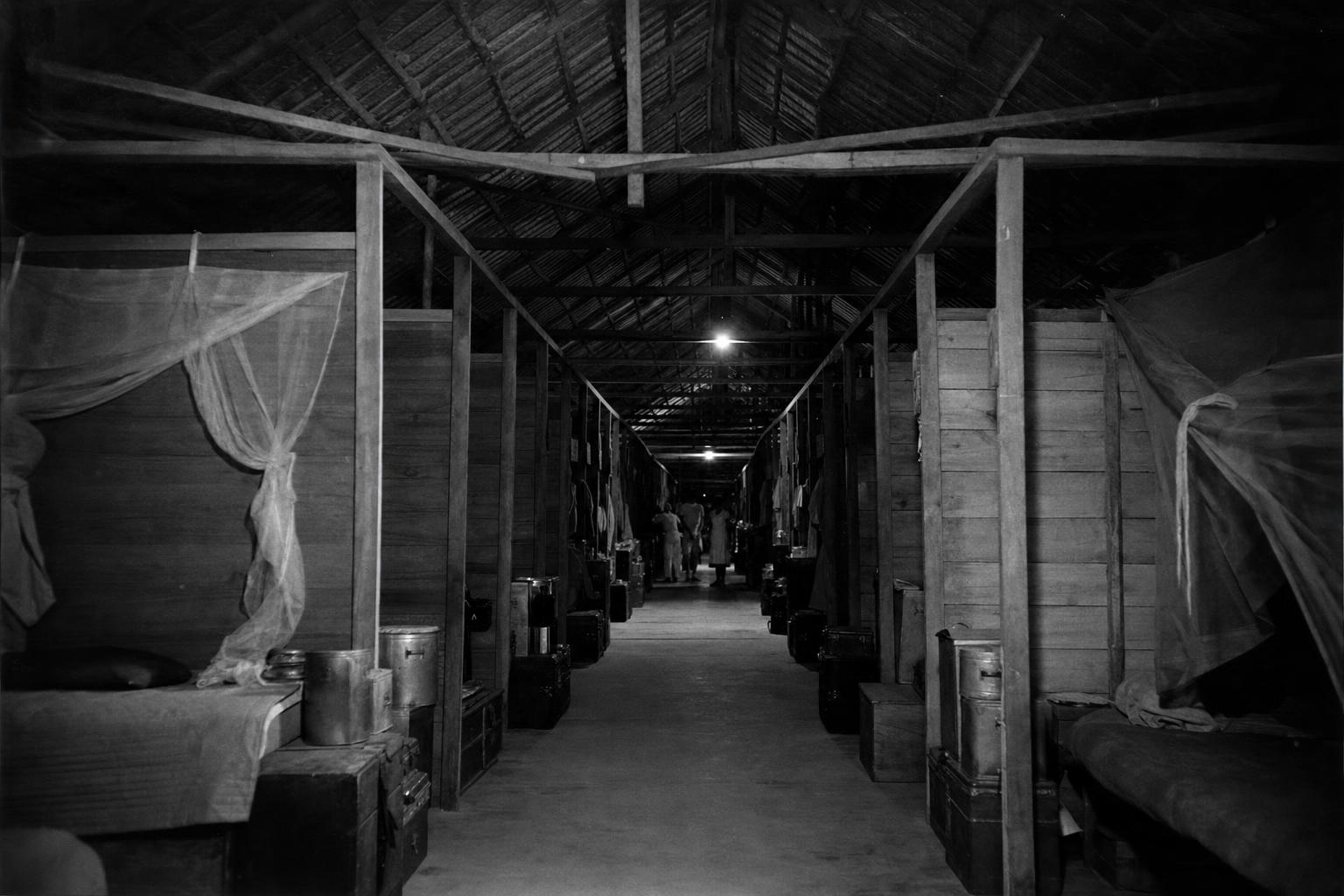
Looking in my diary which I kept on scraps of paper regularly until our release, I note the barracks where we slept and lived contained ninety-two cubicles, the inner walls were of board, the roof made of Nipa. Each cubicle had an open space for a window with a Nipa flap which came down and covered it in bad weather. The inner walls of each cubicle were seven feet high with a communal ceiling, the general appearance being like a cattle barn. Our family rated two cubicles, one 12ft by 12 ft in which we all slept, the other was 8 ft by 12 ft for daytime use. On the outer side there was extended a nipa frame-work which protected the cubicles from the sun and provided space for sitting outside in the shade. Ren made Chris a play-pen of bamboo which was permanently under this nipa awning, and here Paddy and Steve played too.
Beyond this, each inmate had a small vegetable patch. Neighbours never encroached on each others' space and some internees grew creepers between the sections which gave an illusion of privacy. A monitor was elected for each barrack and took complaints to the central committee; he preserved the peace whenever possible or else had incompatible neighbours separated or one moved to another barracks. The barracks were divided into accommodation for families with young children, single women, single men, and older men and women, but sometimes there were misfits and our neighbour on one side was old and grouchy, and I still laugh when I remember him yelling out in the night "quiet there" when either Paddy or Steve tinkled into their coffee-tin potty, which incidentally bore the legend "The Perfect Grind" around it, and which I carried down the central corridor to empty in the latrines!! These were emptied at night by a squad of internees. The adjoining showers had no doors and just before Chris was born in Santa Tomas I remember a small child utterly fascinated by my stomach, and coming up to me and gently patting it. There were notices in the latrines stating "Nothing to be thrown down this latrine" and some wag altered it to "It's nothing to be thrown down this latrine". Towards the end of our internment we were starving on a cup of rice per day (half a one for children) - an American woman used to come into the shower room in our barracks and go up to anyone still wearing jewellery, and if it was valuable she would say, "I can barter that for one kilo of rice". She pestered me as I still wore my beautiful jade and diamond engagement ring. As time passed jewellery disappeared from fingers and necks but I clung on to my ring until the very last night of our captivity when I said I would change it next day for one Kilo of rice - but next day came and we were rescued from death by shooting that morning. This woman and her lover who bartered with the Japanese guards were convicted of Treason upon their return to the U.S.A.
In my diary for 1943, I see the Japanese allowed the first Red Cross Kits from America and Britain to be distributed in the Internment Camps; previous consignments they had kept for themselves and many of the articles appeared for sale in the local markets. Each internee received one kit which contained several cans of spam, liver paste, butter, packets of tea and coffee, sugar, dried fruit, toothpaste, soap and so on. There were cigarettes, boiled sweets and vitamin pills, combs and brushes. Ren and I decided to swap all our cigarette cartons for spam, liver paste and vitamin pills, and that we would not eat any of them until we were starving. This we did, and when we left Santo Tomas for Los Banos Camp we sold our little shack for 2,000 pesos and used the money to buy spam, liver paste and vitamin pills from Filipino/American families who still received food daily from relatives outside the camp. Nearer the end of our internment the Japs stopped all contact between internees and "outsiders". Our squirrel hoard was to help dramatically when we were starving.
Already, before we went to Los Banos in the spring of 1944, captivity was having its effect; one man we knew went mad with hunger, grabbing imaginary meat from the wall, others were unable to cope with the increasing tensions of 5,000 people all packed together, and were removed by the Japs to an asylum to survive or die alone and uncared for by loved ones. Some did survive but remained mentally ill permanently. Single people succumbed to stress long before husbands and wives with children to care for. They were busy looking after their families and had no time to dwell on what tomorrow might bring. The life we had to live was particularly hard for elderly people who were used to being looked after by devoted servants in pleasant homes. They simply could not fend for themselves, and standing in line for hours for unappetising food or a soap ration, standing each morning and night to be counted by the guards, sleeping bed to bed in classrooms, no privacy in the toilets or showers was more than they could bear.
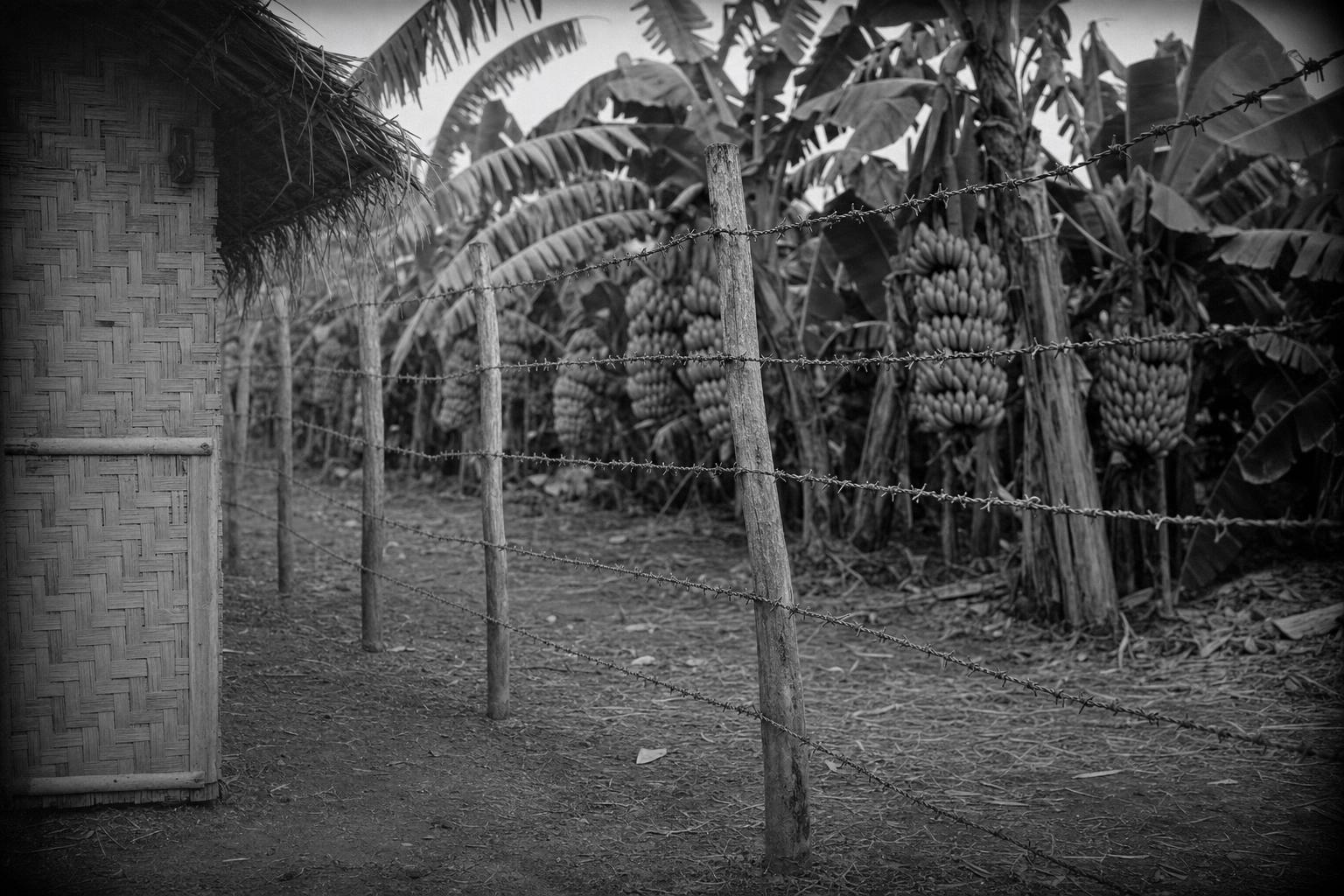
When food became scarce they were the ones to become thin, develop beriberi and suffer persistently from dysentery, and they were the first to die, and they were the ones buried in mass graves because there was no longer weed for coffins, and the survivors were becoming too weak to dig individual graves. I believe we did benefit by moving to Los Banos. Certainly it was better to live together as a family, the grounds were pleasant and until we became too weak to do so we were allowed to walk anywhere within our enclosure, but not allowed to stretch our arms through the wire to pick bananas growing in abundance beyond our reach. Young men did try to escape over the wall at night but they were shot and if they survived our Doctor and Nurses were forbidden to treat them, and they died.