The beach was empty except for two scavenging pigs as we landed and struggled stiff legged up the soft dry sand, but Irquiaga, our Spanish friend, came to meet us as we entered the town; he had been watching for us from his windows. The Japanese Commandant was out of town, but he had instructed Benaventura to meet us and take us to his own home and keep us indoors there until further orders. Irquiaga bundled us into a caramata, which is a little horse drawn carriage, and took us to his home.
Nearly all our Spanish friends were waiting to welcome us; they exclaimed over the size of the children and how skinny Barbara, Ren and I were!
How civilised it was to bathe in a real bathroom, and pull both bath plug and chain once again - there was even toilet paper, such a luxury after banana leaves! How astonishing it was to dine at a long linen covered table with a servant standing behind one's chair, and coffee and brandy after dinner. I stood and contemplated the snowy beds and could not believe that I was actually going to sleep on one. When bed time came it was not such a happy experience because I was so used to sleeping on the floor that I fell out of the bed repeatedly and so did the children. It was several nights before we could stay in them.
The Commandant returned the next morning and we were ordered to be at headquarters by eleven o'clock. Walking through the streets to the Botica Boie which had been converted into the Japanese headquarters, we passed many Filipinos who knew us well and who smiled at us and called the children by name. We looked rather disreputable; Ren wore very washed out shorts and a threadbare shirt, and I had on a skirt made from someone's cast off trousers and a loose shirt that was miles too big. The children wore sunsuits and all of us were barefooted. Barbara was reasonably well dressed as she had clothes which had been left at San Miquel when we escaped from that island.
The Commandant spoke very good English, indeed he sounded like an Englishman, and he was friendly, helpful and gentle with the children. He told Ren that our whereabouts had been known to him all the time we were in the islands, and he pinpointed on a map of the area our last hiding place, but as we had lived peacefully and not incited the islanders against them he had let us remain there. When arrangements were completed for our journey, we would be sent by train to Manila to be interned at Santo Tomas. In the meantime he ordered us to remain indoors without any visitors. He advised Ren to borrow money as it would be useful in camp. Barbara and I were treated very courteously by him and not asked any questions at all. He told us that in peacetime he was a Judge in Tokyo, and laughed when in answer to his question as to who would win the war Ren replied "The Allies" without hesitation, and he said too that although our countries were fighting each other there was no need for unpleasantness between him and us.
When we left Legaspi Ren gave Irquiaga a statement signed by himself that the Commandant had been kind and courteous to us in circumstances where he could have been otherwise and Irquiaga agreed to give it to the Commandant when the Americans returned and perhaps it might help him in similar circumstances, but after the war we heard he had been transferred as Commandant to an American Soldiers camp in Manila two days before the Allies entered the city and had been killed when the Americans rescued the prisoners. I shall always remember how courteously he had treated all of us.
For ten days we remain with our friends and enjoyed once more living comfortably in a well run house. During this time Ren was given radio news from London each night but he did not ask how his host managed to hear it. Apparently the Japs had not confiscated all the radios as they thought they had.
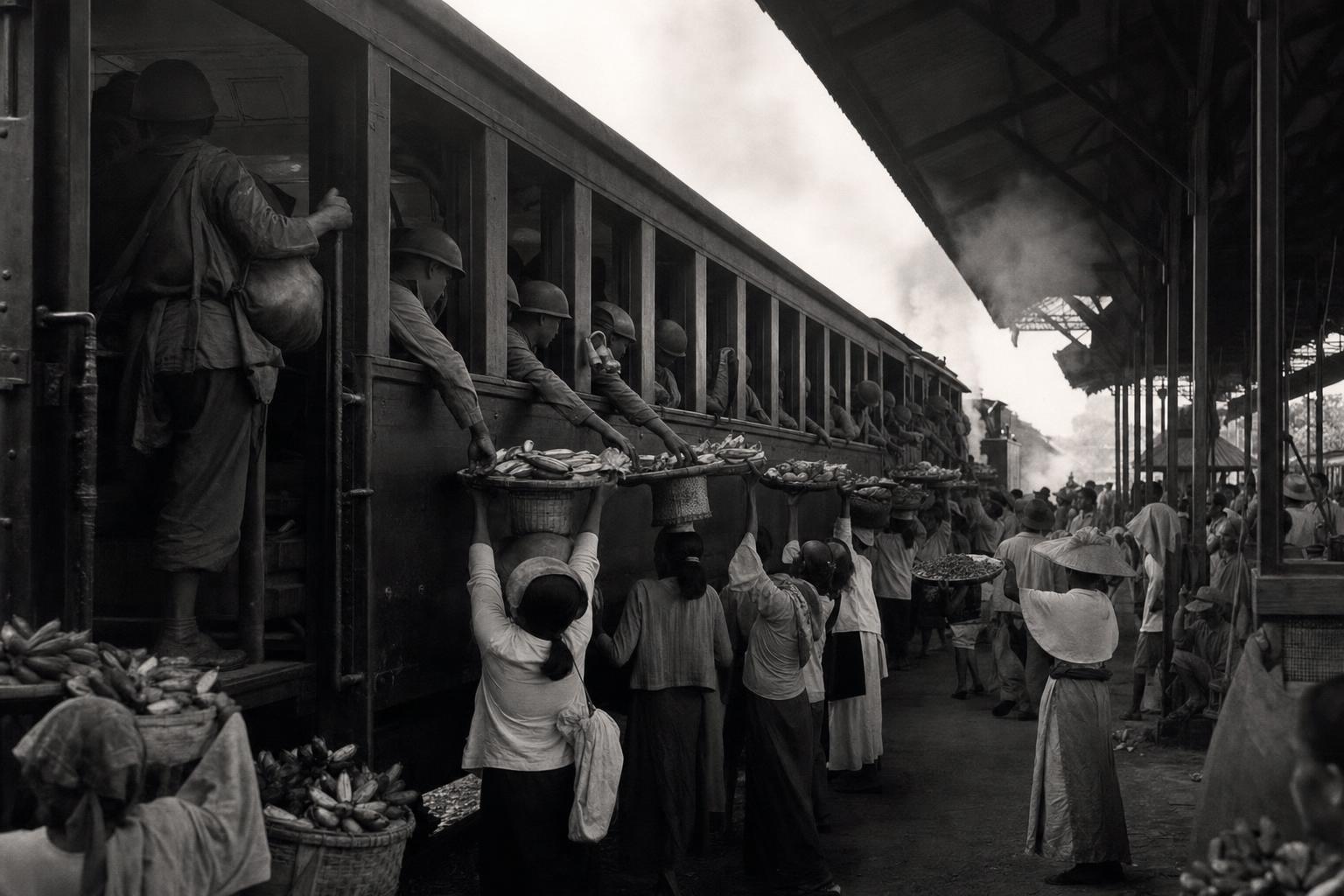
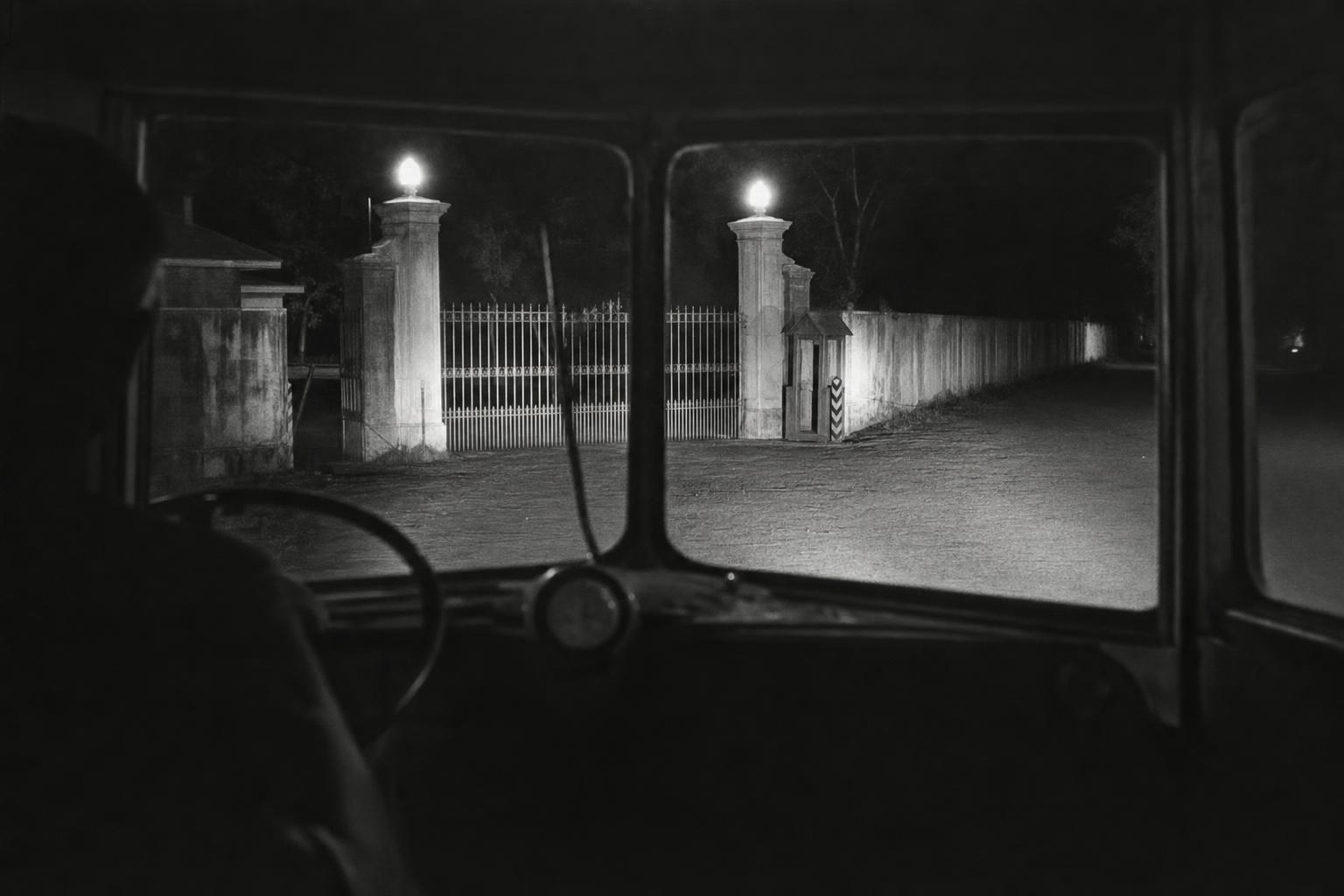
This pleasant interlude ended one morning early when we boarded the Manila train guarded by a Lieutenant and 2 privates. A first class apartment was set aside for us which we had to ourselves all during the tediously long journey despite the fact that the train was shockingly over-crowded and soldiers were standing jammed in the corridor all day. The train stopped at every station and as in peace time, the Filipinos came to the windows laden with baskets of fruit, peanuts, cooked rice wrapped in banana leaves, and baluts to sell to hungry passengers. Baluts which are esteemed a great delicacy by Filipinos are eggs taken from the nest just before the chicken inside is due to hatch out and boiled in the shell like an ordinary egg. The vendors stared curiously at us but were moved on by the guards. The Lieutenant bought some bananas, red glorias, which have a beautiful deep pink skin, for the children, and shooed the vendors away from our window. Paddy was quite happy looking out of the window most of the day but it was a long, long day for us all starting at 6.00am and ending at midnight in Manila, where we were picked up and taken to Santo Tomas Internment camp in a rickety old bus driven by an internee. Straight away we were taken to the Commandants Office and after interrogation we were given a meal and then escorted by an internee to the dormitories; Ren was in the Science block where Men and Boys slept, and Barbara, the boys and I were put in an enormous one in the main building. Next day I was allotted bed space for the three of us in a dormitory in the Children's annex where mothers and small children slept. There were thirty other mothers and small children in it with just standing room between the beds. I was to find out that each mother instinctively wakened up when her own child cried but turned over to sleep again when another one did. In a room full of children whooping away during a whooping cough epidemic each mother recognised her own children's whoops!