The Japanese had been very successful in their attempts to stop rice being sent to our islands and with the scarcity of fruit and vegetables after the typhoon, food was difficult to get, and dull to eat. We lived mostly on camotes and dried fish but the children fared better with eggs and a little amount of milk Anna still gave. Sometimes we killed a chicken and our little pig was turned into salt pork which lasted quite a while, but we longed for tea or coffee to drink and a little rice as a change from boiled kumaras.
Looking over a diary which I wrote at this period on any scraps of paper available, I read of nothing but an intense longing for food and how enjoyable fresh fish and rice were when we could get them. I note that I could not imagine having enough food to eat ever again. Also I wrote some very rude remarks about General McArthur and his inability to keep his promise to return. I see too that Angel Vibal promised to get me baby clothes from friends in Manila on his next visit there. I was apparently very homesick and wondered each day what was going on there. One day I must have been particularly depressed because all I wrote was "No fish ,no rice and no General McArthur." There was a reference about this time to 'no radio news' as some Japanese were quartered at Liquan coal mine.
Sometime in May we had a message from Ren's uncle in Manila urging us again to give ourselves up, he wrote that the internees in Santo Tomas were being well fed, and that we would all be safer in camp than living precariously as we were. The increasing difficulty of obtaining food, the frequent visits of the Japanese to Cagrary, the lack of radio news at this time and my pregnancy, made us give the idea quite a lot of thought. We talked it over for days and another factor which made it attractive was a message from a friend in Legaspi saying if we ever wanted to give ourselves up, he could arrange with the Japanese for our safe transfer to Santo Tomas. Like Ren's Uncle, he urged us to do this before the baby was born. Against this was the fact that though prisoners on our island, we were free to live a normal life as a family, and all the islanders were so kind and hospitable. We knew we could stay on the island with them until the end of the war and that they would see that we did not starve. There was also the possibility of arranging with friends on Catanduanes Island to go and hide there if necessary. We simply could not decide what to do.
Then the Japanese helped us make up our minds. Thirty of them landed at Tambilago and spent two days there and we spent them hiding in the abaca, only returning to sleep in the house at night. Mari went down to Tambilago and returned with the news that the Japanese were searching all the islands for Guerrillas. It was much more difficult to keep the children quiet than formally as Stephen no longer slept much in the day and was always ready to join in any game with Paddy. He also chanted at the top of his voice in the most unexpected situations so that keeping quietly hidden became quite a problem. Our hiding place was as mosquito ridden as usual and no paths of any kind led to it so we had to fight our way through the undergrowth to get there. This time the Japanese set up machine guns in the middle of the barrio and questioned all the male inhabitants about the movements of Guerrillas, we were relieved that although they were nearer to us than they had been for a year, they did not ask about our whereabouts.
After searching Tambilago they moved on to another barrio the other side of our hideout and so we had to continue our day-long picnics. From our hide-out we could see Catanduanes Island far away in the distance and during the day quite big Japanese ships passed Cagrary probably on their way to Legaspi. A Japanese propaganda sheet I saw at this time claimed that Japan was now mistress of the seas. I was depressed enough at the time to wonder if it was true.
Ren and I decided after these last two searches to give ourselves up and be interned. Both of us agreed that we would be better amongst our own people. We decided to write to our friend in Legaspi and ask him to arrange our surrender and we sent a message to Barbara telling her of our decision and asking if she wanted to accompany us.
Once the decision was made the time waiting for a reply to our letter seemed endless, but some days after Stephen's second birthday we received it and a safe-conduct-pass written in Japanese and signed by the Commandant in Legaspi. That same night, or rather early in the morning, the Japanese raided Nagtapas Barrio about two miles from us, searching each house for Guerrillas, so we wrote to Legaspi and sent the messenger off the same day requesting our friend there to send Vicente with a boat big enough to take us to Legaspi. We did not want anyone from the Island to take us in case they were imprisoned on our arrival.
The following two days and nights we spent hiding while the Japanese continued their search for Guerrillas. It would be ironic if they caught us just when we had arranged to give ourselves up! They burned one of the barrios before moving further down the island.
Barbara sent us one of her guerrillas to say that she would accompany us to Manila to re-join her husband and small boy at last, and we replied that she had better come to us immediately so that we need not keep Vicente waiting when he arrived.
Mari arranged to go and live with Auri, Andres and their small son until the war ended. We gave her the few things of any use in the house, arranged for the safe keeping of Anna and her calf until Macabao could take them back to San Miquel, and sent farewell messages to the Alvarados and Barbantes and to Macabao. Funny little Daramas had died suddenly of malaria a few months previously. Ren went down to Gueron one night to tell Tomasa of our decision to go to Manila. She and all our island friends were very upset and begged us to stay saying they would see we did not starve or get caught and they all wanted the new baby to be born amongst them. They almost made us change our minds.
At the beginning of July, Vicente and his brother came to take us back to Legaspi. Barbara had not joined us, nor had she replied to our last message so we hurriedly dispatched Ramon to say Vicente was anxious to leave and she must meet us at 4.00am in two days time at Gueron or we would have to leave without her.
Farewells were said, very tearful ones, to our friends, the children were hugged tenderly and prayers were offered for our safe arrival in Manila; promises to return after the war were made by Ren and I and then Mari and our friends left us to spend our last night in our little hill-top home as we were afraid to sleep at Gueron.
Vicente carried Stiffy down the trail and Ren had Paddy pick-aback. A few belongings had to be taken down to Gueron by Mari and Ramon. It was a very dark night and we were afraid to have more than one small flare so it was rather difficult getting down the steep slippery trail and I was happier when we reached the abaca and coconut plantations and walking became easier. When we arrived at Gueron we were pleased to find Barbara already there.
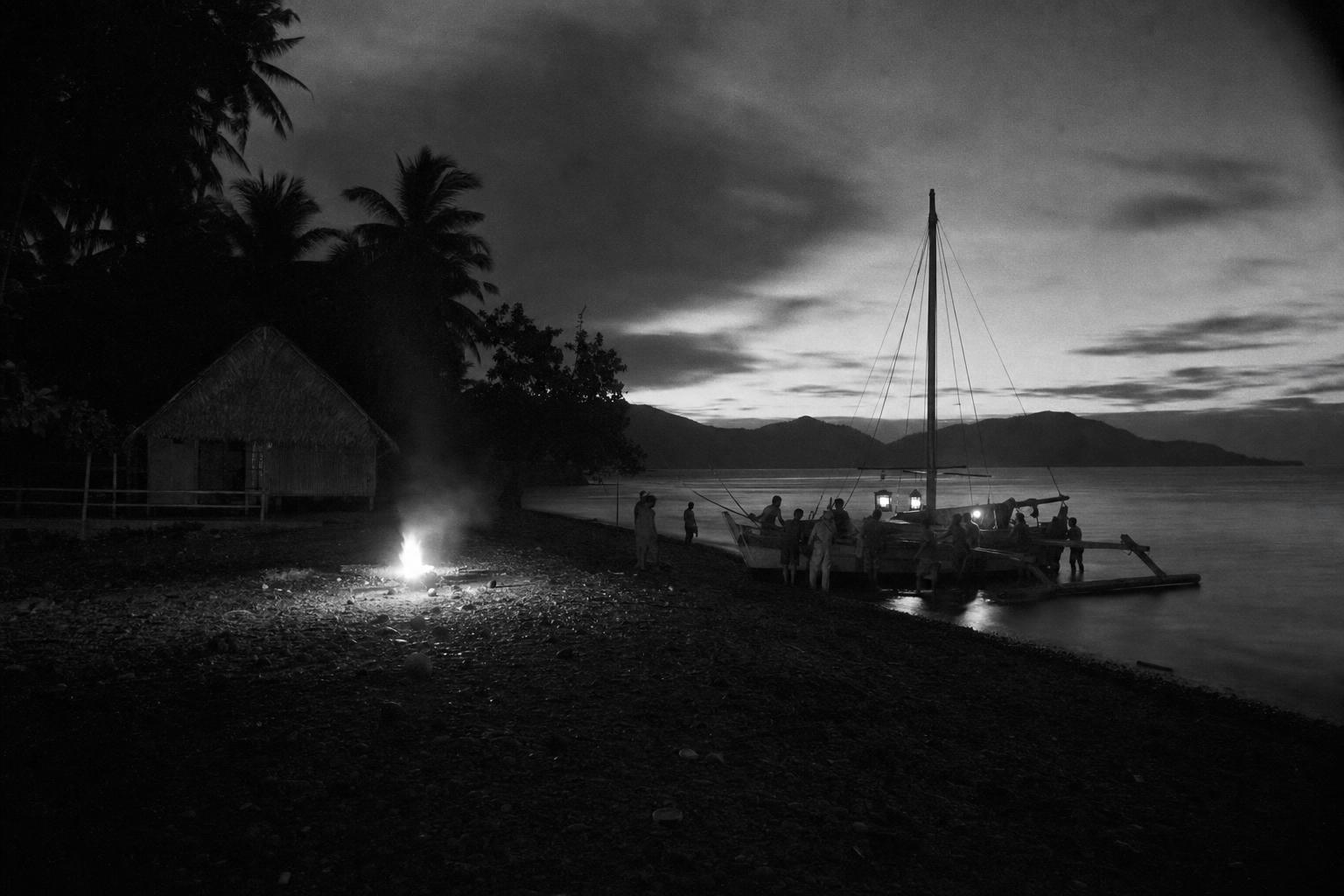
Mari and Tomasa had loaded the boat and put in some food for our journey; how long it would be depended on the wind. It was cold as we settled ourselves in the boat and prepared ourselves for a cramped journey. The Guerrilla who had guided Barbara bade us goodbye and pushed the boat into the water. Vicente hauled on the sail ropes and away we glided. Tomasa's house was dark and it's occupants asleep.
There was very little wind as we glided between Namondie and Cagrary and I thought of Inday and her mad sister, of little Daramas, and the other journeys by boat that we had made in the last year and a half, all of them had been exciting and sometimes dangerous. Stiffy snuggled against me and went to sleep and I watched the dark shapes of the islands and felt sad to leave so much beauty and so much love behind us. These islanders had been so kind to us that I knew I would never forget them, I wished now that we had decided to stay on in the little house but regrets are no comfort and I tried to imagine our reception in Legaspi but that proved too disturbing so I concentrated on the outline of the islands in the dark and tried to place each well known barrio.
At midday we anchored a few miles from Liquan and went ashore to cook rice and fish and stretch our legs. Barbara was very quiet and did not say very much about her stay with the Guerrillas. She agreed with Ren that if we were questioned on our arrival, unless the Japs said they knew where she had been recently, we would let them assume we had been together since we left Legaspi.
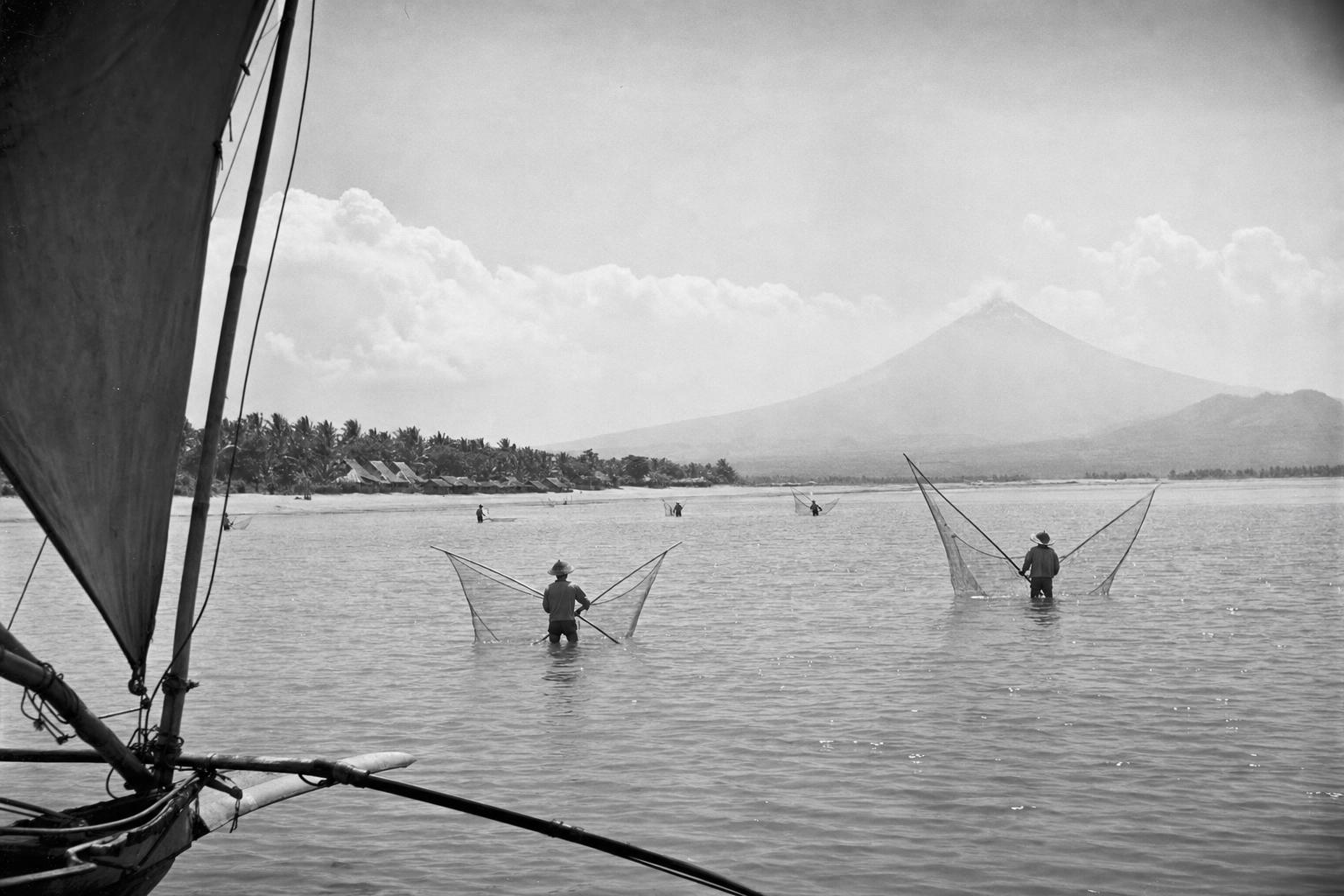
There was no wind all day and it took us twelve hours to get to Legaspi. As long as we sailed between the islands Stiffy and Paddy were happy because they could see the golden beaches, the scattered houses and a few people collecting driftwood or fishing waist deep with huge butterfly-shaped nets, but once we passed Liquan and turned up the gulf to Legaspi, we sailed far off shore and they became bored and cross and finally drifted into uneasy heat drenched sleep. The last time I had sailed up the gulf it was on a windy day and we slipped along briskly with the sails reefed and the vixen well over on her side, but today it was a tedious sail. We passed the black sands where we had anchored often and picnicked ashore, passed the wide sweep of the Poliqui Bay and there in the distance was Legaspi town shimmering in the heat by the waters edge, and further on the beach coconut palms framed San Rogue. I forgot to worry about our reception lost in the memories of our happy life in the old house.