High on the hillside, above the corn and camote lattis we waited for freedom.
Mari and Auri took over all the household chores again except the cooking which I did. Ren cut wood daily for the fire and made coconut oil and salt when we needed it. Tomasa gave me vegetable seeds and I soon had a little garden growing on the slope beneath the house, with tomato, onion, pechay and beans in neat rows. Someone gave us a cock and from our two hens we had a brood of chickens, and we had bought a small pig to fatten. He lived in a bamboo sty a little way down the hill. Mari loved him and he soon followed her to the river when she let him out each day, and there she scrubbed him and talked to him as though he were another small child. The pool near the waterfall was a wonderful place to swim in and we soon taught Paddy to dive and swim. Stiffy sat in the shallow warm water splashing happily. We drew our drinking water from above the water fall. It was a beautiful place to live, but looking from our hut over the tops of the palms to the other islands from them to the open sea, how I longed to be on a ship homeward bound. Our little hut was dark and mosquito ridded because of the trees hiding it, so we spent a lot of time high up on the land cleared for corn and mountain rice crops, where it was sunny and a breeze always blew in from the sea.
We spent our money carefully and made it last a long time. Ramon's mother who lived a mile away came regularly with fruit and eggs for us to buy. She was a tall fine looking woman with a very erect carriage from habitually carrying a load on her head. She had a light brown skin and her face was seamed and dried with age and exposure to the sun and wind. She wore her long white hair screwed into a tight bun on the top of her head, and secured with a high Spanish comb. Her tired eyes were sunk deep into their sockets. Generally she wore a checked tapis with a crisp cotton camisa on top but for fiesta wear she wore a lovely red and white mestiza-gown, which comprises a sarong of patterned silk or cotton with camisa, on top of which is worn a stiff bolero type jacket of abaca cloth with huge heavy embroidered sleeves to the elbow; the embroidery is a copy of the design on the skirt. The jacket has a high rolled collar fastening at the waist. A number of women gathered together all in different coloured mestiza gowns look like a crowd of beautiful butterflies. Even the poorest women has one of these dresses for wearing to mass on Sunday and to Fiestas.
Ramon sold us fish and bought our .rice for us at the barrio so that we really had at that period sufficient food to keep us healthy. About this time of our stay in the islands, when the Japanese had stopped searching for us, Ren and I used to go for long walks whilst Mari minded the children. In this way we came to know most of the landowners on the island. Normally they lived in towns on the main but the war had bought them home to their island where they could live entirely off their land. One of these men, Juancito del Villar, we knew before the war, as he sold both hemp and copra to Ren's firm. He lived at Cagrary barrio about twelve miles away from us and as he went to the mainland quite frequently, we got a lot of local news from him. The track to his home led us high amongst the mountain rice with the blue sea far below us on our left, shadowed by the reefs under its surface. It was a pleasant walk beside the rice and then down again into the woods through the abaca and coconut plantations until we came to a little stream which led us to Juancito's house. His wife who was once a cabaret girl from the Aqua Caliente in Legaspi always welcomed us warmly and set before us hot thick native chocolate to drink, with crisp little rice cakes.
Sometimes Ramon took the three of us to visit his old Uncle. Barbara wasn't very keen about walking and didn't come with us very often. Of course it was a joy for Ren and me to go by ourselves. When the old man celebrated his seventieth birthday, he invited us to his party. What a time we had!! We arrived about noon with Ramon and his little wife Ipang to find both rooms of the house crowded with guests; the old people playing Monte and card games in one and drinking vast quantities of tuba, a wine which is fermented from coconut trees, whilst in the other bigger room, young people were dancing to a banjo and violin. When we entered the old man grabbed his wife and led her off in a fast two-step. Ren and I followed. What fun it was to dance again and be at a party.
Later in the day there was a terrific feast of crabs, crayfish and fried rice, followed by sticky sweet rice and bananas. In the late afternoon, Ren and I returned home, but Ramon and Ipang stayed until the party was over, early next morning.
When the islanders found out how we liked walking, they invited us to any party that was taking place, however far. Funerals were celebrated with as much gusto as births or weddings, and we went to many. At first we went because we enjoyed eating meat again, as a pig or calf was always killed on these occasions, but we soon went because we enjoyed seeing new faces and the noise and excitement too. Late in November the parish priest from Tabaco made his first yearly tour of the islands to celebrate Mass at the bigger barrios and to marry and baptise the islanders. It was a time of travel from one barrio to the next to attend Mass and join in the Christening and wedding parties. Whole families walked together or went by boat all dressed up in their clean crisp best. If Mass was to be said near us, we all went together. Mari and Auri enjoyed themselves tremendously because they could talk to strangers and gather all sorts of information.
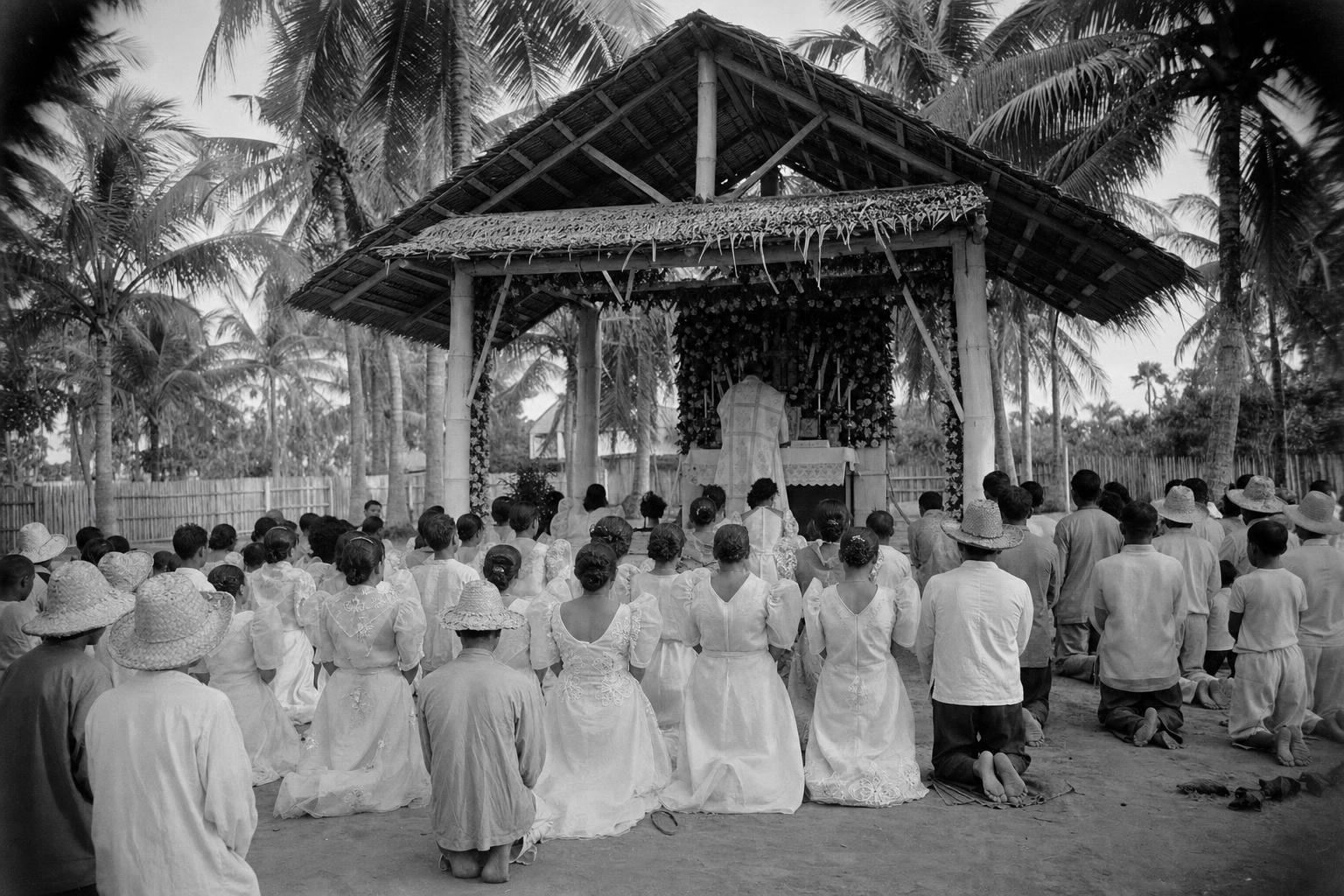
When the Priest arrived at Juancito's barrio, all of us were invited to attend the fiesta after Mass. We travelled in a casco, which is sort of a deep narrow canoe, arriving in time for Mass. It was celebrated under a canopy made of nipa palms and bamboo poles. The four posts of the canopy were of peeled banana tree trunks and they shone like pale green marble. After Mass we watched numerous babies baptised and four couples married. Then we all went to the breakfast party at Juancito's house. It was about eleven o'clock by then, and as we had been to communion all of us were very hungry indeed. The Priest, who was a fat, jolly Filipino, sat at the head of the table, with Barbara and I on either side of him, and Juancito sat next to Ren. His wife did not sit down, as she was far too busy looking after the serving of the food to dozens of guests. The long tables were laid outside the house. The Priest and I got along well together until he mentioned that unless the islanders paid a small fee he would not marry or baptise them. I protested against this but he insisted that he needed money to pay for the boat trip as his parish was completely cut off from its usual sources of revenue and he and three other priests had barely enough to eat. I felt very sceptical about this, as I could not see his Filipino parishioners allowing him to go short of anything and felt, that as he was housed so well and fed so royally at each of his stops on the island, he should have forgotten about the fee. However, we changed the subject and devoted ourselves to the magnificent meal before us. Further down the table Mari and Auri with Stiffy and Paddy were enjoying them too, and of course the children were receiving a lot of attention because of their fair skins.
After breakfast the tables were removed and dancing started straight away on a hard clay clearing outside the house and further away from it a ring had been fenced off for cock fighting. After the celebrations of Mass, cock-fighting was the big attraction of the day. It is the national sport and nearly every family has at least one fighting cock. The men carry them from place to place tucked under their arms like pet dogs. They are generally magnificent birds, sturdy and very brightly plumed.
A nipa roof had been put over the cock-pit to protect men and birds from the hot sun and under this, men squatted petting and stroking the proud plumed birds and discussing their merits and faults. It was a colourful scene as the bright birds strutted about watched by the brown skinned little men, dressed in gaily embroidered abaca shirts and white shorts. They nearly all wore pointed wide brimmed straw hats and smoked long home made brown cigarettes. Bets were placed and preparations made for the first fight. Juancito and the Priest arrived and a bell was rung to tell everyone the fights were beginning.
I had never seen a cock-fight before and never wish to see another. A large black cock and a snowy white one were carried into the ring and razor sharp spurs fitted on each of their legs near the feet. The owners squatted opposite each other in the centre of the ring holding the cocks firmly on the ground facing each other. The birds were truculent and eager to fight. At a whistle from the umpire, they were released, the men left the ring. The birds, neck feathers ruffed, stalked up to each other, both manoeuvring for an attack. The black leaped upright a foot off the ground, his spurred feet murderously downstretched but the white stepped aside quickly, and the stalking began again like two boxers. Then in a flurry of wings, the white cock sprang upwards and downwards thrusting a spur into the top of the black one's leg near the chest and the fight was finished. The vanquished cock tried to attack but tottered and collapsed in a bloody heap on the hard clay. During this play the spectators were shouting and gesticulating wildly, screaming encouragement's and making last minute bets. The fight took less than three minutes in an atmosphere of intense excitement. The owner of the loser picked it up and carried it out of the ring dangling, by the legs, but the winner was proudly cradled in the owner's hands, and taken off to eat his rice. How so many people could watch so tensely, and bet so heavily on two cocks fighting, I never understood. The only consolation about the cruelty was that death came very quickly to the wretched loser.
I was very glad to move away to the little store adjoining the ring and buy a needle for fifty cents which was the cost of food for us all for two days. But our clothes were tearing badly with constant washing and had to be mended.
Ipang and Mari mingled with the barrio folk, Ramon joined the gamblers squatting under the trees and Auri took Paddy and Stiffy to play with the other children so Ren and I joined Juancito and Father Rojas in the cool darkened sitting room and talked about the war which seemed utterly remote from this little world in which we now belonged. I was interested to hear that a Japanese priest was attached to Legaspi Parish, and wondered if he ever went to San Rogue, and if his parishioners told him the family who lived there before he came were Catholic too. We sipped hot, sweet chocolate while we talked, bought by Juacito's wife. She said she was too busy to sit beside me today, but I think she was shy of the priest.
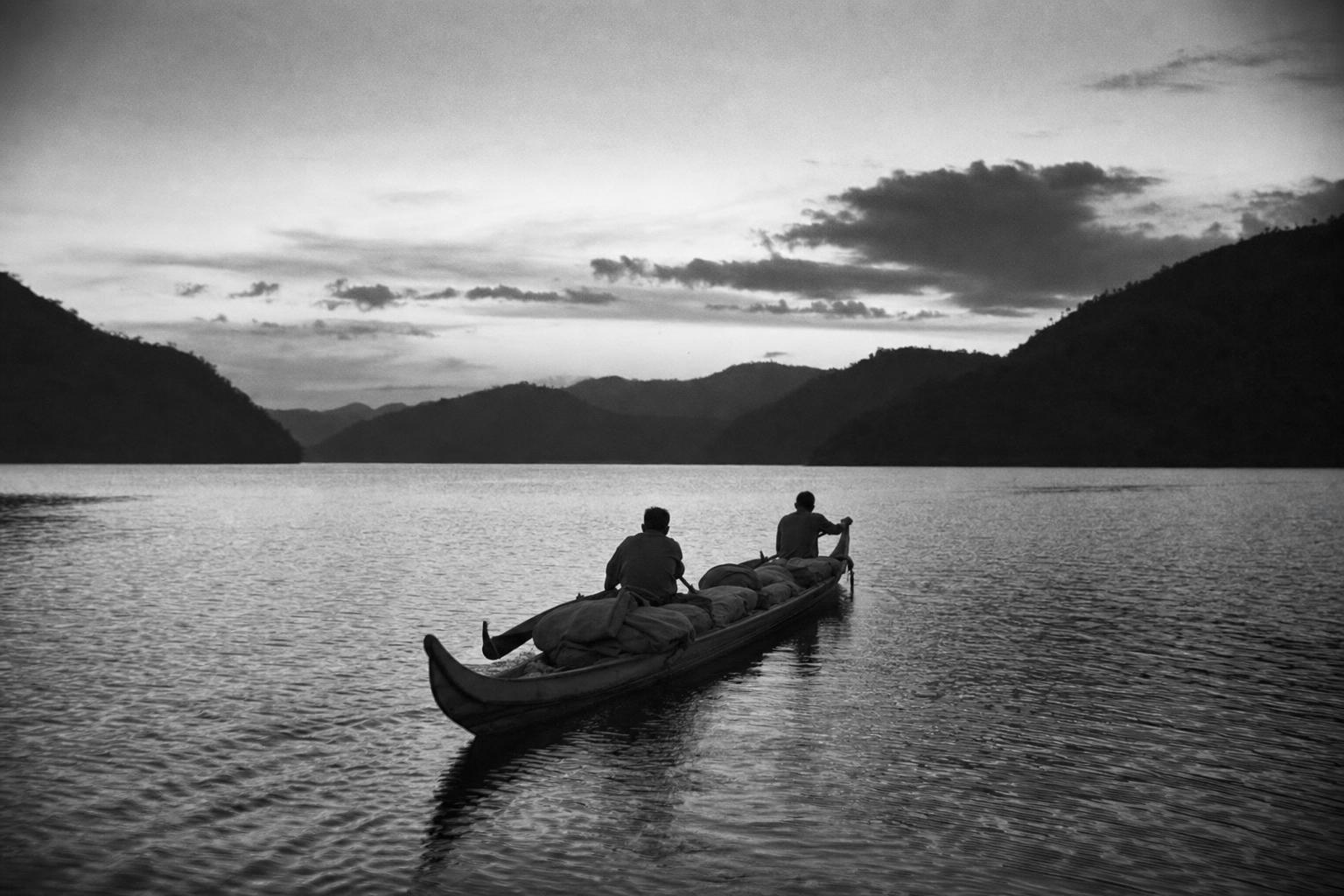
A constant noise came from the kitchen where preparations were being made for another gargantuan meal after Benediction. Squawking chickens were caught and killed and plucked, lobsters dropped into boiling water, eggs collected from the nests and vegetables prepared, whole pigs were already roasting on spits outside the kitchen door. Unfortunately we could not stay to supper as the tide was going down and soon the casco would not float. Ipang, Auri and Ramon stayed to attend benediction and dance and gamble afterwards, planning to walk home in the night. We said our thank yous and goodbyes and were soon paddling home across the calm land locked bay to Gueron, the children curled up asleep on the bottom of the casco.