Ren's birthday on April 23rd, 1942, St George of England's day passed. We had been at Gueron two months. Corrigidor and Bataan had fallen and we heard with loathing and horror about the death march of the prisoners northwards, but we had no news of Europe or the Philippines. Macabao had been to see us and also Daramas. The hacienda at San Miquel was taken over by Japanese, but they kept Macabao as overseer. Nearly all the cattle were slaughtered and the plantations were idle. The Japanese watched Macabao closely because they suspected he had helped us escape from San Miquel so he found it difficult to get away to see us. By now all the Philippines was occupied and the people waited hopefully for deliverance. There were continuous rumours of disasters in Europe. Our lives were circumscribed by the daily swim, the visit to the water hole, a walk and the inevitable meals of rice, fish and camote tops. There was plenty of time for brooding. I thought constantly of England and longed to be there and wondered what was happening to my family. We were drugged by monotony. No longer was I afraid of capture by the Japanese, but I was afraid to think how long our island captivity would continue. The children were happy never having remembered another life.
About this time we left Tomasa's house. The Japanese had reorganised the Police Force in Albay and as they had a fairly good idea where we were hiding they decided to send three or four Filipino policemen to bringing us to Legaspi. It seemed a silly plan to us but Daramas was afraid that we might be unfortunate if there was a pro-Jap in the party, and advised us to move inland again off the trail where strangers to the island would not look for us. This time there was no urgency in our departure and it took several days before we were established four miles inland in a small house that was specially built for us by Ramon who was a nephew of Tomasa. We hated to leave her and were upset at living in such a cramped house again, and we missed the sea dreadfully.
Tomasa entertained the police when they visited Gueron. They were not really looking for us as they knew us well and hoped we could remain safely on the island until the war finished. They left Ren a present of three precious bottles of beer and an enormous live crayfish. They told Tomasa that the Japanese had elected mayors in all the towns and were re-opening the schools. The army administered the police force and punishments for anyone unlucky enough to be caught by them were severe. A man we knew who used to sit outside Ren's office all day and play with an enormous snake curled around his body was caught stealing and had both his hands cut off, other men found with forbidden radios were shot. Chinese who refused to collaborate were given the water treatment or left strung up by their arms until they changed their minds. Our own boatman, Victor, had tried to sail the Vixen away from Legaspi to hide it, but he was caught and tied to a post on the wharf and forced to look up at the sun all day. He was philosophical and thought himself lucky not to be shot.
The police said thousands of Japanese were garrisoned in Legaspi and Tabaco. Filipino Guerrillas were operating in the Caramoan hills and ambushing the Japanese when they travelled lonely roads. They raided granaries and removed the rice and corn. After advising Tomasa to tell us to remain away from the coast the police left to return to Legaspi. I should like to have heard their explanation why they had no prisoners.
Little Daramas came to visit us as often as he could in our new hut high above the coconut and camote plantations hidden amongst the abaca. Ren and I became very fond of this strange little man. He was boastful, dishonest and glib, and he treated the islanders disparagingly, but he was full of humour and fun, always singing, and he was our friend. I never saw him gloomy. I am sure he would have done anything for us. As it was, he walked miles coming to see us and he was always loaded with presents of rice, live chickens and wooden bakyas for us all.
He had spent a poverty ridden childhood in Manila he told us, and eventually had gone to work as a houseboy for an old American woman. According to him, she practically adopted him, took him with her to the States where she sent him to school. He had lived there for many years, and in Hawaii, but now she was dead. When the war began in the Philippines he was a trade union leader in Tabaco. He was out for all he could get for himself but with us he was always truthful and honest and treated us as children who had to be cared for and protected. He understood Barbara very well and was always kind and sympathetic to her. Poor Barbara found Ren and I an unsympathetic pair I am certain, and our sense of humour very odd sometimes.
June 1942 was quite an exciting month for us. All in one month Macabao visited us, Mari and Auri returned to us, Stephen celebrated his first birthday, we found someone who owned a radio, and we were given a milking cow.
Macabao, Auri, Mari and Daramas arrive one bright sunny morning while Ren was chopping wood and I was washing clothes in a stream which flowed from a rock-bottomed pool fed by a little water fall which cascaded into it from high grey rocks. Stiffy and Paddy paddled in the stream while I washed and rinsed the clothes. I heard their voices as they came up the hillside through the abaca plantations, Daramas singing as usual, and dumping the washing at the side of the stream and picking up Stiffy and telling Paddy to follow, hurried back to the house. It was good to see all our friends together. We just stood and smiled at each other, and then Auri and Mari were on their knees hugging the children and exclaiming how big they were. Mari told us they could not stay with Macabao, they were so anxious about us, and were always sorry they had stayed behind at San Miquel. Neither Ren nor I wanted them back because we had more privacy without them, and two less to worry about on our periodical flights, but we could not send them away so they rejoined our household and once again became our responsibility.
Macabao and Daramas were loaded with food for us. They had sailed as far as Gueron, but had walked four miles carrying a sack of rice, an enormous hand of bananas, and a basket of fresh vegetables from San Miquel, and Daramas had two live chickens dangling from his wrist.
Macabao brought a letter from our Spanish friend Pedro, in Tabaco, in which he wrote that he had been to Manila and had seen Ren's Uncle Hubert there. Because he was an old man and crippled with arthritis, he was allowed to live in his own house in Manila, but each week he had to report personally to the Japanese Police. The old man sent one hundred pesos, and strongly advised us to give ourselves up as he thought it madness to stay hiding in the hills. He thought we would be better off interned with all the others in Manila. Pedro wrote that it was entirely up to us, but to let him know through Macabao what we decided to do. If we remained he could send us more money in three months time. He wrote that he and his family were well and living in Tabaco again. Marichu, his wife, sent me clothes for the children.
Pedro, Barbante and Alvanado had sent us gifts too, a pound of precious flour, one dozen eggs, a can of Johnstons baby powder, a bar of toilet soap, some sewing thread and a needle. Mrs. Alvarado had sent one of the hens, which we promptly christened Mrs. Alvarado, the other we named Mrs. Daramas, and decided not to eat them. Paddy and Stiffy were pleased because they could play with them. That morning Ramon had brought us some crabs so Auri and Mari cooked a meal of rice, egg plant and crab cooked in coconut milk with green beans and all of us sat on the floor and gossiped about things that had happened since we were together last. While Stiffy was drinking rice water, I said how upset I was that the children had to go without milk, as I thought both of them were far too young to grow properly without it. Macabao looked at me and then burst out laughing, and yelled, "I'll send you a cow". I asked how on earth he could do that, and he said some of the remaining cows on the ranch had calves, but that the Japanese were killing them regularly, and he had hidden several cows and calves from them. One of these he would send to us at night by boat. He named a night and Ren and I said we would go down to Gueron to help unload it and bring it up to our hillside refuge. There was a lot of laughter about the plan, and the fact that no one could milk the cow. We promised we'd soon learn. Macabao had no war news to give us as the Japanese had taken away his radio and he never went to the mainland anymore. He was completely isolated in San Miquel just as we were here and knew no more than we did. How we wished we had a radio. The rest of the day passed quickly and at dusk Macabao and Daramas left us. We had enjoyed their visit tremendously, even Barbara who was always quiet chatted away happily to them. We sat around the smudge fire at night and the girls told us all about their stay in San.Miquel.
Stiffy's birthday was on June 11th and Ren made him a bamboo doll and Ramon gave him a wooden bird on wheels that flapped its wings as it was pulled along. I made him a bag filled with acacia seeds to throw about his pen and a soft rag doll made from an old shirt. We had a little party with a real cake, made with some of the flour. Ren made a tiny candle of bamboo which was stuffed with a coconut oily rag and lighted. All of us sang "Happy Birthday to You" while Stiffy and Paddy blew it out repeatedly. Stiffy had grown into a sturdy merry little boy, still blonde and green eyed. He had eight teeth and could talk quite well. Birthdays always made one horribly homesick, both for England and our real way of life. They made me wonder if this native living would ever end and whether I should ever take my children home to England. We heard about the radio on Stiffy's birthday, and felt tremendously excited at the thought of hearing the news ourselves. Ramon said it was at Liquan coal mine, and that though the Japs had taken over the mine, they had left the Syrian owner in charge, and only visited once in a while, and they never stayed the night there. He thought it would be easy for Ren and me to paddle a banca there one night, listen to the news and return on the same tide. We decided to go the next night, both of us, as Mari and Auri would be with the children.
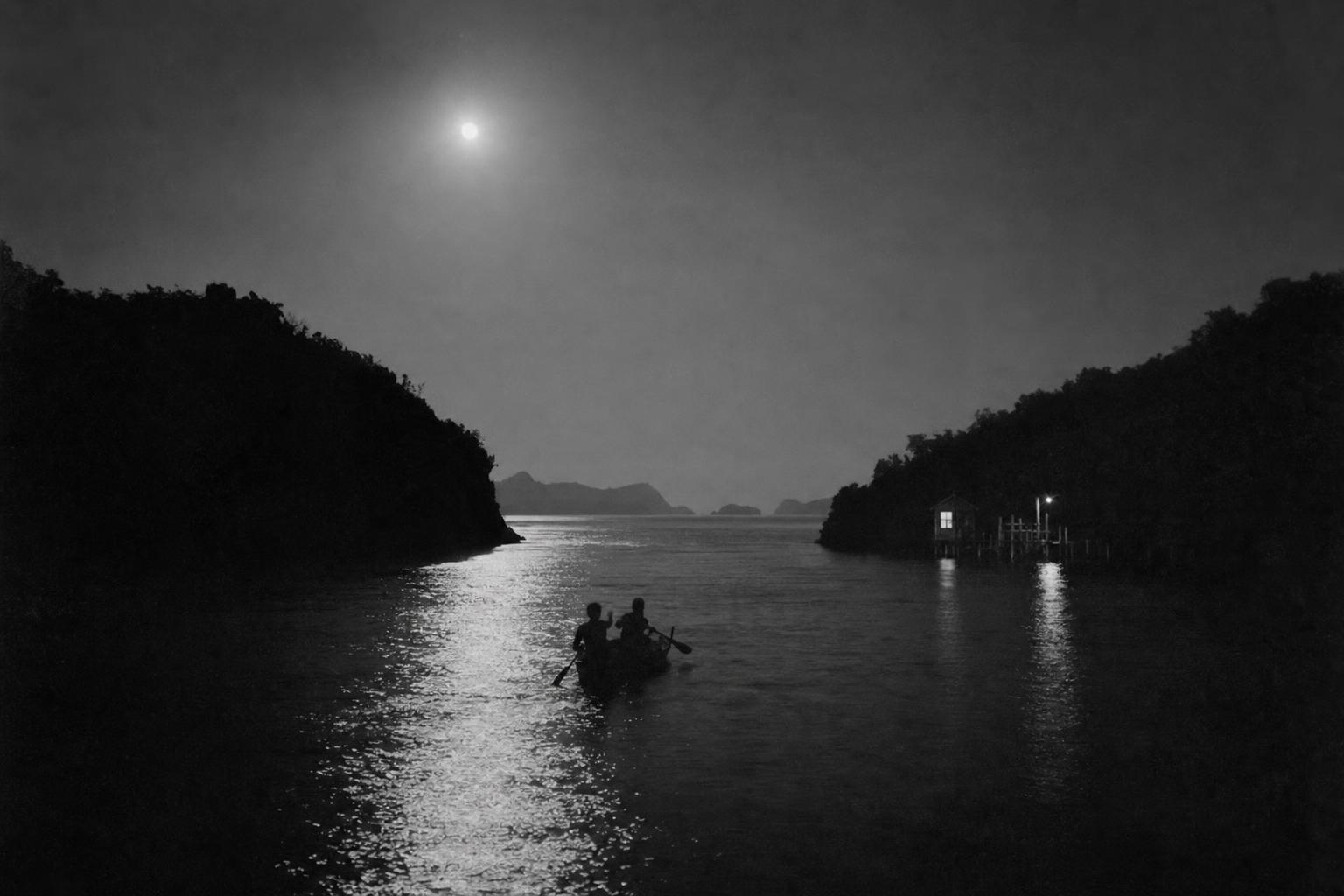
Paddling away from Gueron at dusk we felt absurdly free. It was cool and calm and we passed by Namondie and kept Baton Island on our left. It took us about two hours paddling to get to Liquan on the Albay gulf end of Batan Island. We slipped in some distance from the coal jetty, and walked .up a little track leading to the Manager's garden, through the gate and up to the sala window. Peering inside we saw Salesby sitting alone so we knocked on the door and stepped inside. What a shock he got! He knew us by sight as we had visited Liquan before the war to see some Americans who worked for him. When we were sitting comfortably he bought us a whiskey and water. I had drunk plain water for so long that all I wanted to do at first was just sit and sniff the stuff. Ren told Salesby that we were simply just desperate for news, and that was the reason for our visit. Why he was permitted to have a radio I never found out, but for us it became our lifeline with home and civilisation. We were in time for the news and that well remembered voice from London was startlingly clear. I couldn't hear anything at first because that far-away voice made me cry, and I sat there with memories of other places and other times around me. England, my home and my people there and Legaspi, my home too.
Slowly the voice from home took command. We hadn't even known about Africa and heard about the desperate fighting at Tobruk; China and Russia were fighting grimly. That night there was no good news but Ren and I felt we were alive at last again, and that our world was still in existence. Salesby said that we could come and listen anytime and that if there was any good news he would send a message to us.
Like everyone else we ever met in our time hiding in the hills Salesby was kind and generous to us. That first visit we made to him, he insisted that we take back with us food we had almost forgotten about including coffee beans and tea, margarine in a huge can and some flour. The Japanese paid him in goods for the coal he produced.
We paddled back to Gueron in bright moonlight, hurried up the trail talking all the time about the news we had really heard with our own ears. We were happier than we had been for months.
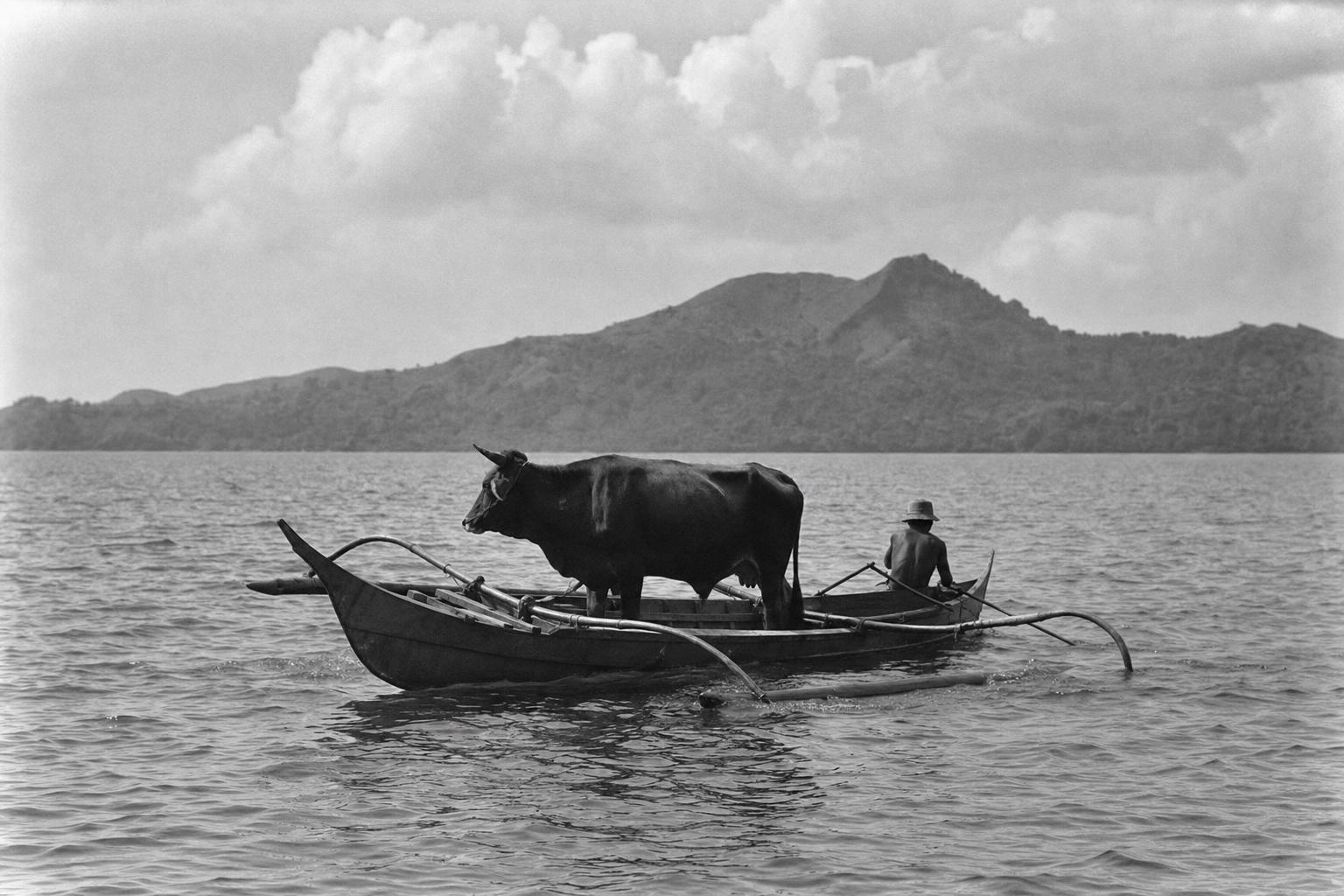
The cow, which we named Anna, arrived at the end of June. Ramon and Ren went to Gueron to meet her. Ren said she looked huge, wedged into the narrow boat with her calf trussed underneath her, much more like an elephant than a cow, outlined against the sea. Two men had paddled the banca all the way from San Miquel, long before Ren and Ramon drove her into the clearing I heard her bellowing far down the trail.
Watching Ren trying to milk Anna was one of the funniest things I have ever seen. She was cross and rather wild naturally, and wouldn't stand still long enough for Ren to get anywhere near her udders. As he crouched near her, she circled around him and he couldn't get his hands on her, so he drove two strong poles into the hard clay clearing outside the house about a cows length between them and tied another horizontally across them shoulder high to the cow. Approaching her carefully he caught the rope around her neck and led her to these bars and firmly tied her head rope to one end and a rear leg to another; a third pole was knocked into the ground, and her twitching tail secured to this. Ren was now ready to milk into a small aluminium coffee pot, which was the only suitable utensil we had, but fumble and pull and curse as much as he did, not one drop of milk came out of that bulging bag. Then we had the idea of putting the calf on her and as soon as it was sucking happily, I pushed it aside and Ren directed the flow into the coffee pot. How I wished I could sketch that scene: The uncooperative cow, the Nipa hut, Stiffy and Pat at a safe distance watching, Ren cursing, I laughing and Mari and Auri leaning out of the window giggling helplessly, and Ramon holding the calf by a rope.
It wasn't many days before Ren could milk her very well without any help from the calf. Afterwards he or I would lead her along the trail until we found a good grassy spot where she was left until five in the afternoon with the calf, at which time we took the calf away from her, and tied them up for the night so she could give us some milk in the morning. As the months passed we had to go further and further away from the hut to find grass for her amongst the coconut and abaca palms.