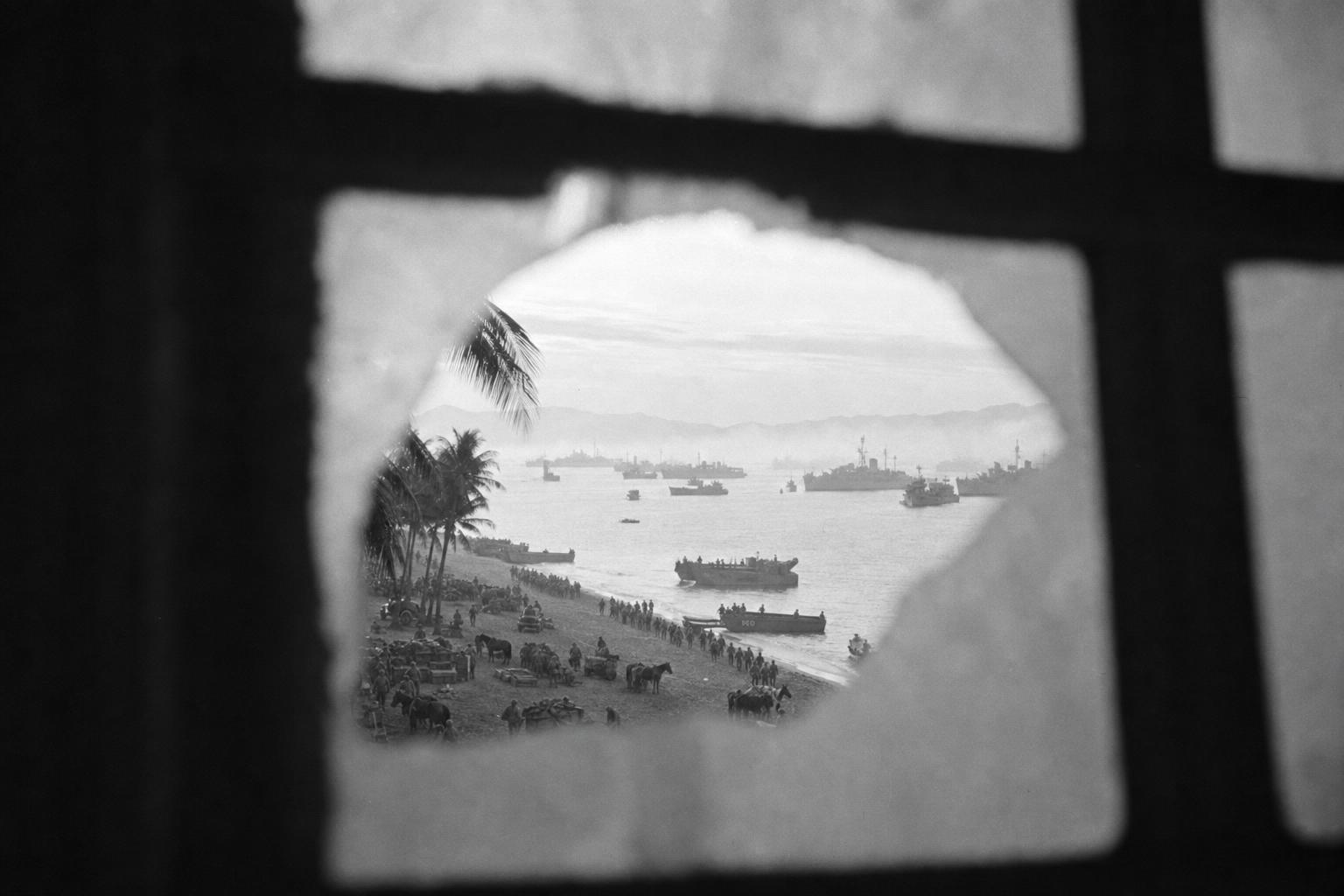
"Mam, the Japs are in the garden," said Mari in a flat voice when I went through to the nursery early next morning. I thought to myself, poor Mari's broken down now and is imagining things, so I relied, "Are they really, Mari, how did they get there?", but looking out of the window which was still shuttered, through a little hole in the shell window pane I froze with horror. The Japanese were in the garden. Dazedly I saw Japanese war ships anchored or steaming up the Bay with submarines on the outer fringe and inshore I saw hundreds of little brown soldiers being disgorged from barges onto the beach. Yes, they were Japanese alright, drab looking squat, bow legged little men pouring up the beach in a very quiet and orderly manner. Dispatch riders were pushing along their motor bikes and horses were being tugged up the sandy, dry beach. And worst of all, there in the corner on my garden facing the sea, they had rigged up a radio station while we slept. During the night I had wakened and hear the shuffling of feet and the clack-clack of wooden bakyas along the road at the back of the house. It sounded as though the barrio folk were leaving their homes. I wakened Ren and told him to listen but he sleepily told me not to be silly and get back into bed.
I asked Mari why on earth she had not wakened us as soon as she knew what was happening. Though she had known since early morning that ships were coming up the bay and that the folk had indeed left their barrio in the night she exclaimed that she could not waken me because Filipinos believe that the soul leaves the body during sleep and if the body is awakened abruptly the soul has no time to return. I supposed it could have happened if the Japs had awakened me unexpectedly but Mari hadn't thought of that.
Dressing quickly we met our guests in the sala; they too had only just awakened. We found all the servants except poor Mari and Auri who were supposed to leave this day for home, had left us during the night. We tried to think coherently what to do. Brown, who was acting British Consul in Legaspi came down the servants' stairs at the back of the house and hidden by the bushes from the soldiers in the front garden burned some Consular papers which he did not wish to fall into Japanese hands. He returned to the house and we decided that American planes would be coming soon from Manila and we had all better get down to the back garden where we had a half made air-raid shelter. There were still no soldiers near the back of the house and no one in the lane behind the garden so Ren picked up Paddy and I took Stiffy in my arms and we crept quietly down the back stairs followed by Barbara and Mari. Auri carried milk for the children and Brown carried an umbrella to help keep the sun off them. I was terrified. I expect we all were but some how we managed to look as unconcerned as if we were off for a day's picnic.
The shelter was nothing but a narrow deep sand pit; it didn't even have a roof. All of us squatted down into it as comfortably as possible. I had remembered to bring cotton wool and all of us stuffed some into our ears as we'd heard it was a good thing to do during raids. Paddy and Stiffy promptly took theirs out and Stiffy sucked his happily.
By then it must have been about 6.30 in the morning. No sooner were we settled in the pit than we heard planes. "They must be American ones," we said. They were Japanese, and some were sea planes. Over the house they came and then over the adjoining warehouses where there were thousands of pounds worth of hemp and copra stored. So low were they, that I could plainly see the pilots and the bombs ready to go. Paddy wasn't a bit afraid despite the shattering noise. Every time the planes came over us I grabbed Stiffy tight, shut my eyes and crouched as near the bottom of the dug-out as I could and prayed frantically to God and St Christopher to deliver us from this horror. Over and over the house the planes flew but no bombs were dropped. The hot morning sun poured into the narrow space we sat in, and the children became fretful and began to cry. Still no American planes came. It seemed hours since we'd been creeping down the stairs and Stiffy felt like lead on my knees and my arms were stiff with holding him. About noon we decided the landing was going to be unchallenged and as there were still no soldiers in the back garden we crawled up out of the shelter and slowly crept up the stairs into the cool, still shuttered house. How wonderful the iced water tasted.
Restlessly we wandered around the long sala keeping away from the windows in case the sentries in front of the house decided to fire through them. Paddy begged to be lifted up and shown the big ships we were talking about. Stiffy slept on the settee. It seemed an unending nightmarish day. Paddy called Stephen "Stiffy" because he could not pronounce "Stephen"!
Brown and Ren made a foray across the open bridge at the back of the house leading to the kitchen and brought back some food which we all ate eagerly, despite our uncertain future. Pouring out milk for the children I wondered what was going to happen to San Rogue. Looking at the etchings of London Bridge on the wall and the lovely painting of a Filipino washing her long black hair beside a stream, I wondered if the Japanese would admire them too and who would use our beautiful old silver and china when we were gone. Had I really stood in the quiet garden last night and thought of Christmas and Peace?
Now I thought of escape and being shot, but it was ridiculous to think of escape with the front garden full of soldiers and the town over-run with them already.
Suddenly there was a sharp rap on the big wooden door at the bottom of the front stairs. Brown went down to open it. The rest of us clustered at the head of the stairway and watched him open the door and return accompanied by a Japanese soldier and a Japanese civilian from Legaspi. The latter we knew well as he kept a bazaar formerly and, until the morning, had been interned in Albay Camp. The soldier bowed low and our civilian shopkeeper told us in Spanish that the Captain needed our house because of its' good position, but we could remain in it for the time being. I said to Ren that they had not decided what to do with us for the moment. Ren replied in Spanish to the Japanese that the house would not be a good place for us to be in when the fighting started and as there were two small children and four women amongst us, could we leave it and go to another Company house at Tabaco about 20 kilometres away? This was translated to the Captain and to our astonishment, he agreed that it was a good idea and gave his permission verbally for our departure and wishing us a polite good-day left with the little Jap interpreter.
Hurriedly we made preparations for immediate departure. I put a few clothes for us in a basket and some canned milk for the children, took a quick look around this house I loved so much, and was ready to leave. Then Brown wondered whether he could take the car out of the garage under the house without being shot by a sentry. The Captain had not said how we were to get to Tabaco. Ren settled the question by walking out of the house and down to the town. He found the Captain in a bar belonging to some Spanish friends of ours and received permission to take the car. Long after the war was over we heard that Filipinos fleeing from Legaspi had told our friends in Iriga that everything must be alright because they'd seen Mr Fox in a bar in Legaspi with the Japs. So our friends optimistically remained in their houses and a few days later were captured and interned in the local goal in Naga. Ren said later it was rather odd walking into town with a line of little Jap soldiers on either side of him, none of them paying the slightest attention to him.
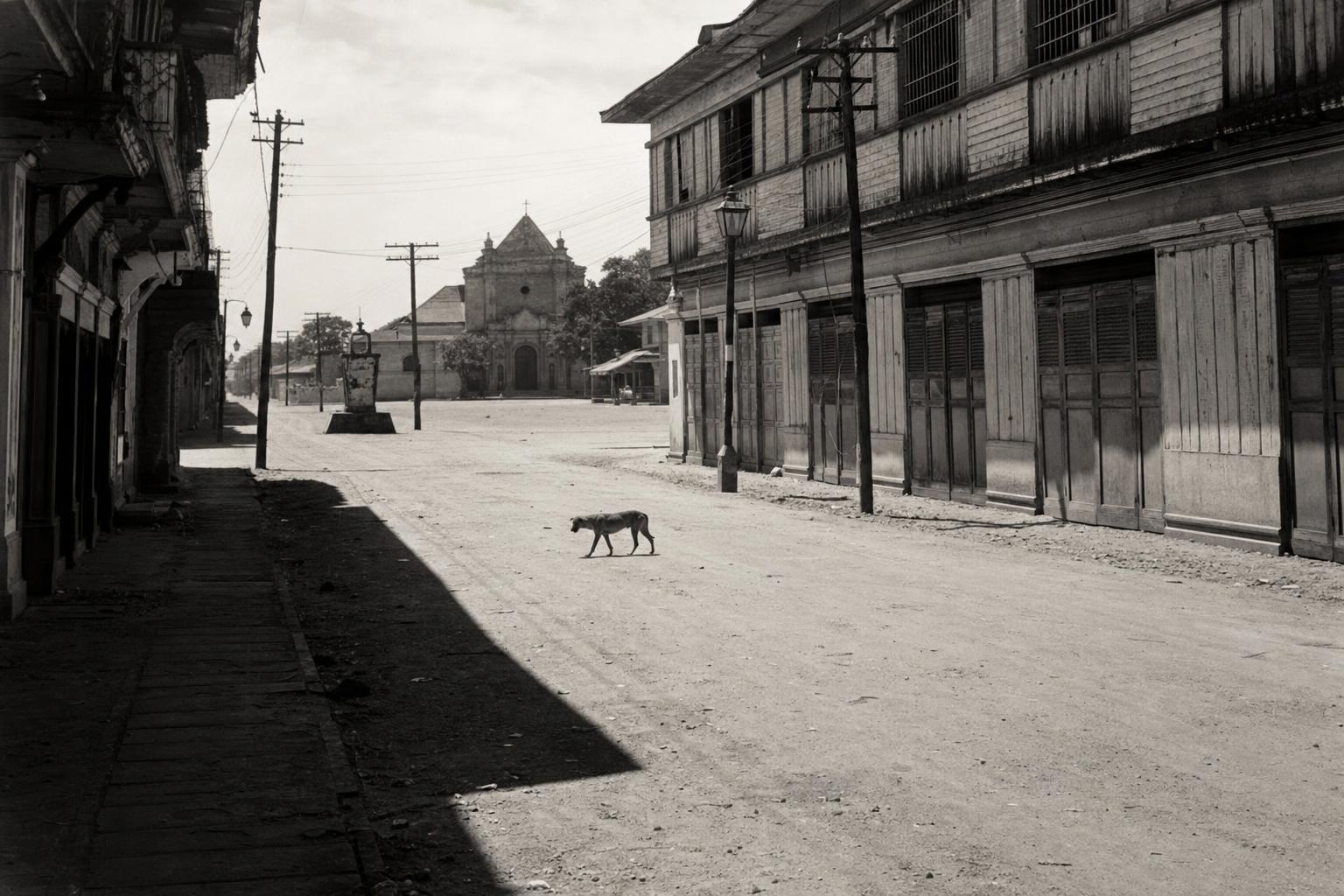
Into the Buick we stowed our bundles, a case of milk, a sack of rice and ourselves and off we went. The house still looked peaceful. I know that we left our happy, irresponsible carefree youth there. When we returned five years later nothing remained of the house or gardens. Only rusty steel girders riddled with bullet holes showed where our home had stood. The town had a closed up look as we sped through it. How different from its' usual happy bustle. Today no suave Indians bowed to me from their shop doors, no friendly Chinese sat outside his grocery in his vest and drawers sunning himself and reflectively picking his teeth and scratching his belly. Only mangy cats and scurvy looking dogs lay in the shadows on the dusty street. The market was deserted. and so was the hotel when we stopped there to see if our friend wanted to come with us. A year and a half later I saw her in Malate Hospital and she told me she and a group of Spaniards had walked the three hundred miles to Manila.